Walletizing the social, Socializing the wallet
©️ 2025 0xLuo. All rights reserved. Chinese Version | BlockBeats
A recent cast from Farcaster co-founder Dan Romero said that Farcaster's focus has shifted from "social-first" to "wallet-first" has sparked widespread attention and discussion. For active Farcaster users, this shift has been obvious for months: ever since the Farcaster app introduced its embedded wallet in February, it has supported more chains, and wallet-related features have grown increasingly robust. Dan’s cast wasn’t a surprise so much as a recap of the direction the team has been steadily pursuing all year.
But for people less familiar with Farcaster, the cast seemed unexpected. Many reacted with disbelief, saying they never imagined that the "last hope of crypto social", the "only surviving SocialFi project", would "declare failure", "abandon social", or "betray its original mission". Some lamented that the "social track has been disproven", that "Web3 social simply doesn’t work", or worried that the community is drifting toward a more "casino vibe", with the team "charging full speed in the wrong direction".
The divide stems from differing views on what the Farcaster wallet actually is. In reality, the embedded wallet added this year isn’t a sudden strategic shift, but a natural upgrade from last year’s reliance on external wallets for every onchain action. And as Frames evolved into richer, more interactive Mini Apps, the need for seamless onchain interactions only grew. The embedded wallet was introduced to support these new use cases, to add missing infrastructure beneath the social network, not to abandon the social network itself.
The wallet is an addition, not a replacement;
it enhances social, not encroaches on it;
it expands social, not abandons it;
it follows the momentum, not a forced pivot.
The underlying open social protocol remains unchanged, and the diverse client ecosystem is still very much alive, you can switch to another client anytime and experience pure social if you prefer. The official Farcaster app’s social features are also still there. it simply added an embedded wallet this year, extending the existing product by enabling seamless Mini App onchain interactions, deeper integration with the social graph, and smooth onchain actions directly from the social feed.
What the team adjusted was the product focus and the path they believe can drive network-wide growth. They no longer spend time onboarding every type of user for the sake of "diversity", nor do they continue investing in Channels, whose impact has been modest. After years of carefully crafting a small but delightful "cosy corner", they recognized that the "social-first" strategy had not achieved strong enough PMF, tens of thousands of DAU is still niche. So they took a pragmatic step back to the first principles of crypto applications: serving value flow.
On this foundation, the convergence of the wallet and social is what truly strengthens product differentiation, offers a more realistic growth path, and moves closer to the PMF Schelling point for crypto-native social. In fact, Farcaster’s shift in focus this year echos the broader trajectory of crypto social as a whole: "Walletizing the social, Socializing the wallet", a natural convergence for consumer crypto apps. Today, nearly every crypto product with even a hint of social features includes a wallet, while wallet apps are increasingly trying to layer in social elements. Not to mention the many projects that were designed from day one with a native social + wallet identity.
Walletizing the social app
To stand out, every crypto app must answer a simple question: how is it different from its traditional, off-chain counterparts? And for crypto social apps, the question becomes: how are you different from Web2 social products? Product manager Yu Jun once proposed a well-known formula for evaluating whether a new product is compelling:
Product value = ( New experience − Old experience ) − Switching cost
Some products have naturally low switching costs, like Threads, backed by Instagram’s massive social graph, reached 100 million users in just five days. Some are simply lucky enough to catch a wave of user migration: Bluesky positioned itself as a "censorship-free Twitter" and rode the momentum of Twitter refugees.
But most crypto apps don’t have that kind of foundation or luck. To convince users to even glance at them, compared with larger, more polished Web2 products, they must focus on delivering truly new experiences. Early crypto social products started from a technical mindset: integrate blockchain at the protocol layer to achieve decentralization. But embedding crypto at the bottom layer is invisible to most users. It offers no new experience, no meaningful differentiation, and often makes onboarding more cumbersome.
Both Farcaster and Lens, for example, store identity data onchain, Farcaster on OP Mainnet and Lens on Lens Chain, to guarantee "not your private key, not your social account". But the truth is, most users don’t care about the underlying architecture, they care about what feels new at the product level.
The Farcaster team understood this challenge early on. Their philosophy has always been that "Product-led protocol development", and they hoped a flagship client could drive growth across the entire network. If their goal were merely to build a social protocol, they could have stopped long ago. they had already implemented most of the core ideas of decentralized social, shipping a "sufficiently decentralized" protocol from day one, one designed for openness, programmability, and composability, allowing developers to build all kinds of applications on top of an open social graph.
But if they had simply let the ecosystem grow unchecked, like Nostr, ActivityPub, or Lens, users wouldn’t switch over just because the underlying technology is different. A free-for-all ecosystem also brings noise, which degrades the user experience. The predictable outcome is that users won’t come, and even if they do, they won’t stay. That’s why the Farcaster team decided to build their own client, to attract users through product quality, not just protocol design.
High-quality social circles are a new experience. Unique alpha info is a new experience. And blending crypto with social is a new experience. Farcaster initially succeeded at the first of these by onboarding a group of high-quality early users, an advantage that became a rare moat. But it couldn’t support broad growth on its own, especially in a crypto world where many users are motivated by pure incentives. Ironically, Farcaster was once criticized for being "too wholesome". for a long time, talking about token prices felt out of place, relegated to the /DEGEN channel, where reach was naturally limited.
Everything changed in early 2024 with the launch of Frames, a crypto-native feature that truly differentiated Farcaster from traditional social apps, and with the community-driven rise of $DEGEN as a creator-economy experiment. These two forces unlocked a surge in activity. by late January 2024, DAU jumped from around 2,000 to more than 10× that. Part of this growth came from product innovation, and part came from the fact that the high-quality community Farcaster had nurtured was finally capable of incubating projects within an open social network.
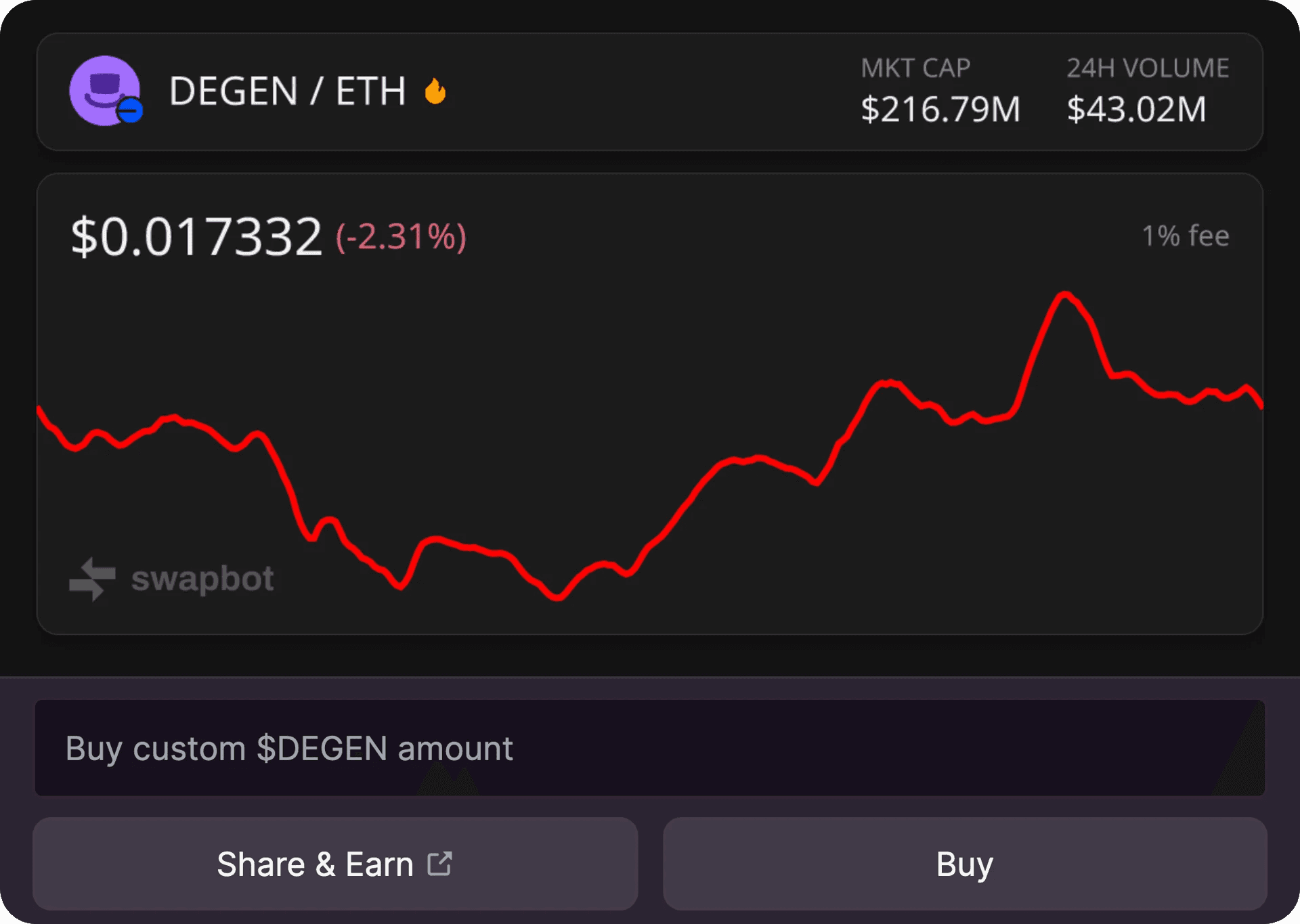
At that point, Farcaster had already made the leap from the "agrarian age" of pure social networking to the "crafts age" of early crypto integration. the combination of a social graph + Frames + external wallets was the first time social content and onchain actions were meaningfully connected. Solana later tried something similar on Twitter using its Actions protocol and a browser extension, showing that the intersection of social media × crypto apps × wallet interaction is a direction everyone wants to explore.
Frames did introduce a genuinely new experience. users could mint NFTs or execute transactions directly inside the social feed. But it was still limited, at most four action buttons, transitions that felt like a slideshow, and significant performance constraints. And the moment a wallet signature was required, the user had to jump out to an external wallet, breaking the flow and fragmenting the experience. From day one, the community was already calling for a full wallet, yet it took another year before that became reality.
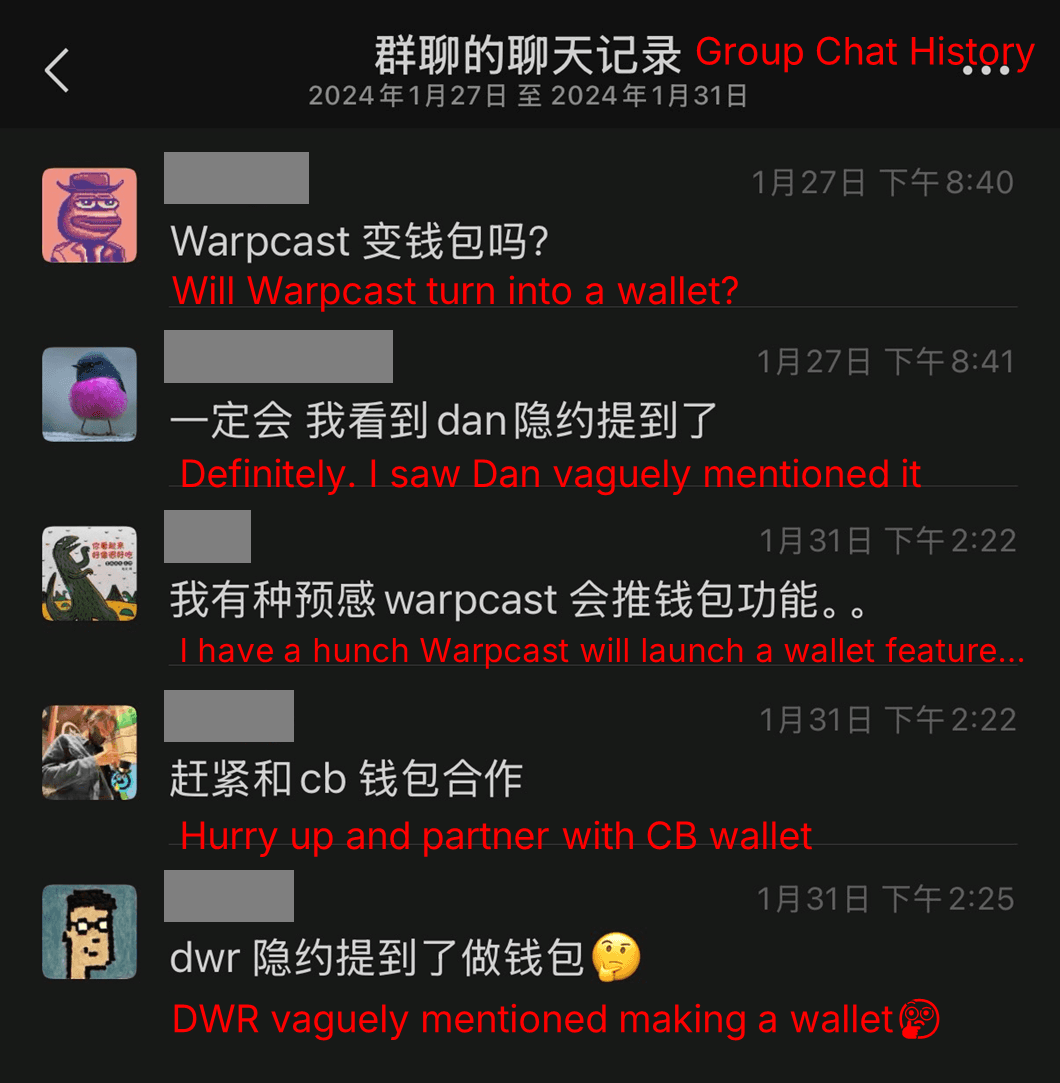
Later in the year, as the memecoin supercycle arrived, from the rise of PumpFun to Clanker, which was born natively on Farcaster, the surge in token launching created an even greater demand for trading. The importance of the entire flow from discovery to execution became increasingly obvious, and the wallet naturally became a more critical entry point in that process.
It’s not hard to see why smoother interaction with mini apps inside a social environment requires two things:
a more flexible, higher-performance framework capable of supporting richer Mini App experiences.
a shift from external wallet connections to an embedded wallet that makes onchain actions truly seamless.
We’ve already seen this validated in Telegram’s messaging ecosystem, where Mini Apps and the embedded TON wallet sparked a massive wave of usage. So it was only natural that Farcaster followed a similar evolution this year:
Frames → Mini Apps
External wallets → Embedded wallet
If something can be built on the web, it can be built as a Mini App, permissionless, composable, and usable across any Farcaster client. This dramatically expands what a social app can do natively, and with the embedded wallet, onchain interactions no longer require any jarring handoff to an external app. In other words, Farcaster has moved from the "craft age" of basic crypto features to the “industrial age” of more powerful integrated functionality. This is not a deviation from the path, it is the natural extension of the trend. Not a forced pivot, but a necessary evolution in response to real market demand.
the embedded wallet is not the death knell of crypto social media, it’s the industrial revolution of crypto social media.
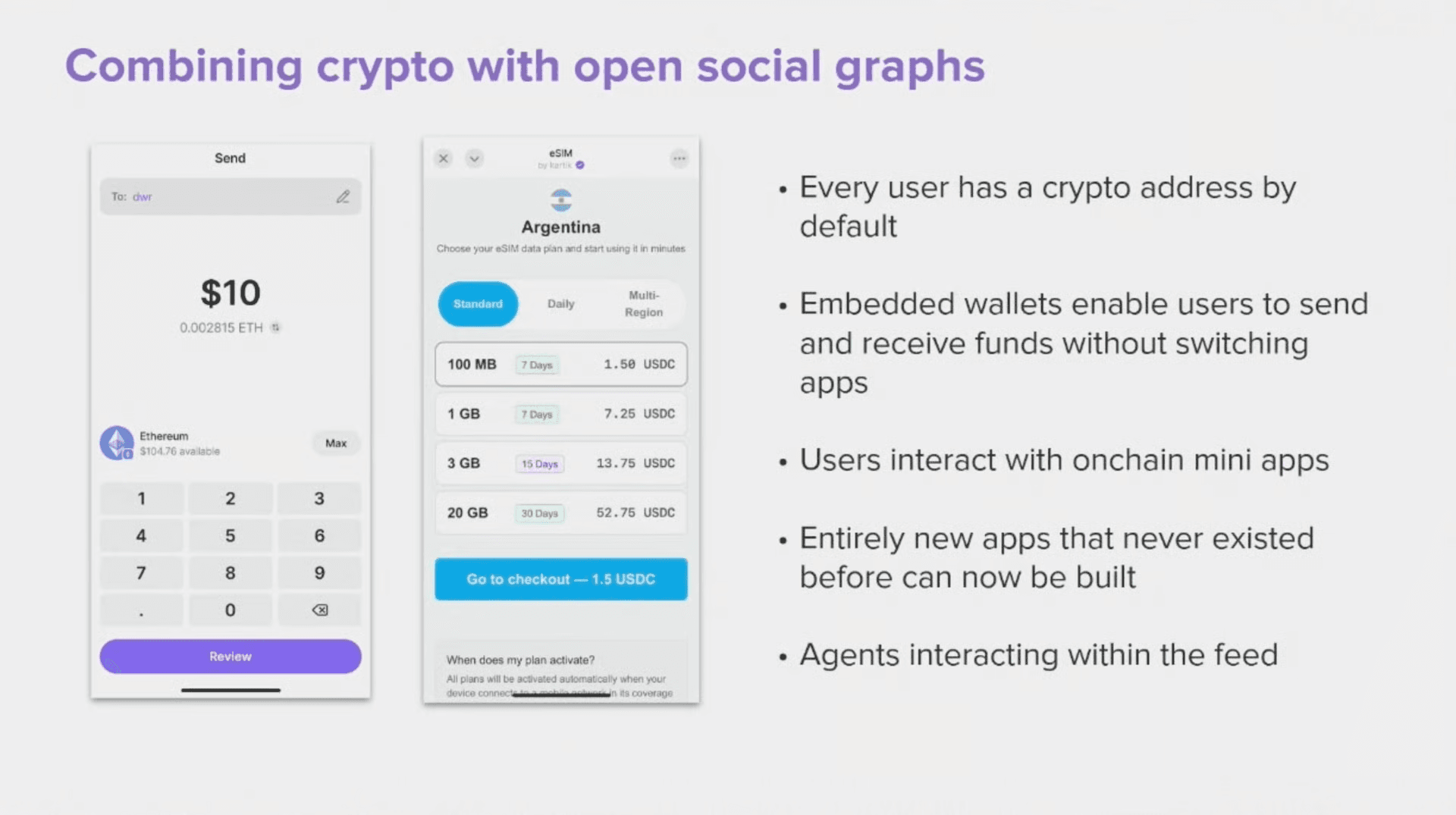
With an embedded wallet, onchain activity naturally begins to flow through the social graph, trading signals emerge from social relationships, and asset issuance, distribution, discovery, trading, and community-building can all happen within a single app. It also becomes trivial to interact with Mini Apps, enabling almost every type of crypto functionality: games, video, livestreaming, audio Spaces, podcasts, prediction markets, DeFi, and more. The rich Mini App ecosystem and the embedded wallet now operate as two engines in parallel, weaving onchain interactions seamlessly into everyday social behavior.
Apps like Noice, Bracky, QR, and Harmonybot have all unlocked new forms of crypto-native social interaction made possible by the combination of social graph + Mini Apps + embedded wallet. Each had its moment of breakout activity, and under this wave of experimentation, Farcaster’s DAU even reached a new all-time high in late October.
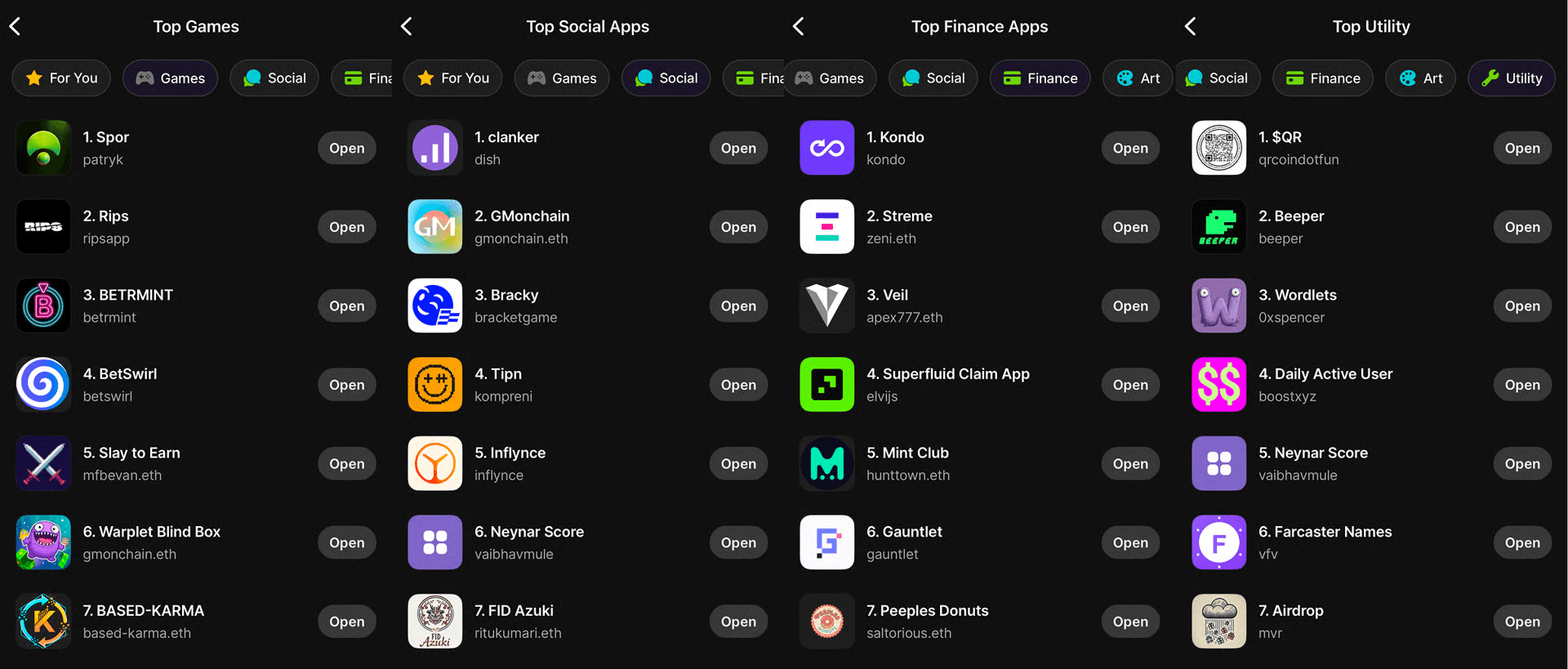
These are experiences users can actually feel, use, and build new behaviors around, and they are precisely what differentiates crypto social from traditional social products. Even if users initially come only for the wallet’s convenience, lower fees, smoother execution, frictionless cross-chain interaction, they may still end up "come for the tool, stay for the network". That alone is already a step forward from the previous reality, where crypto social apps had to rely solely on social features to compete for attention against Twitter.
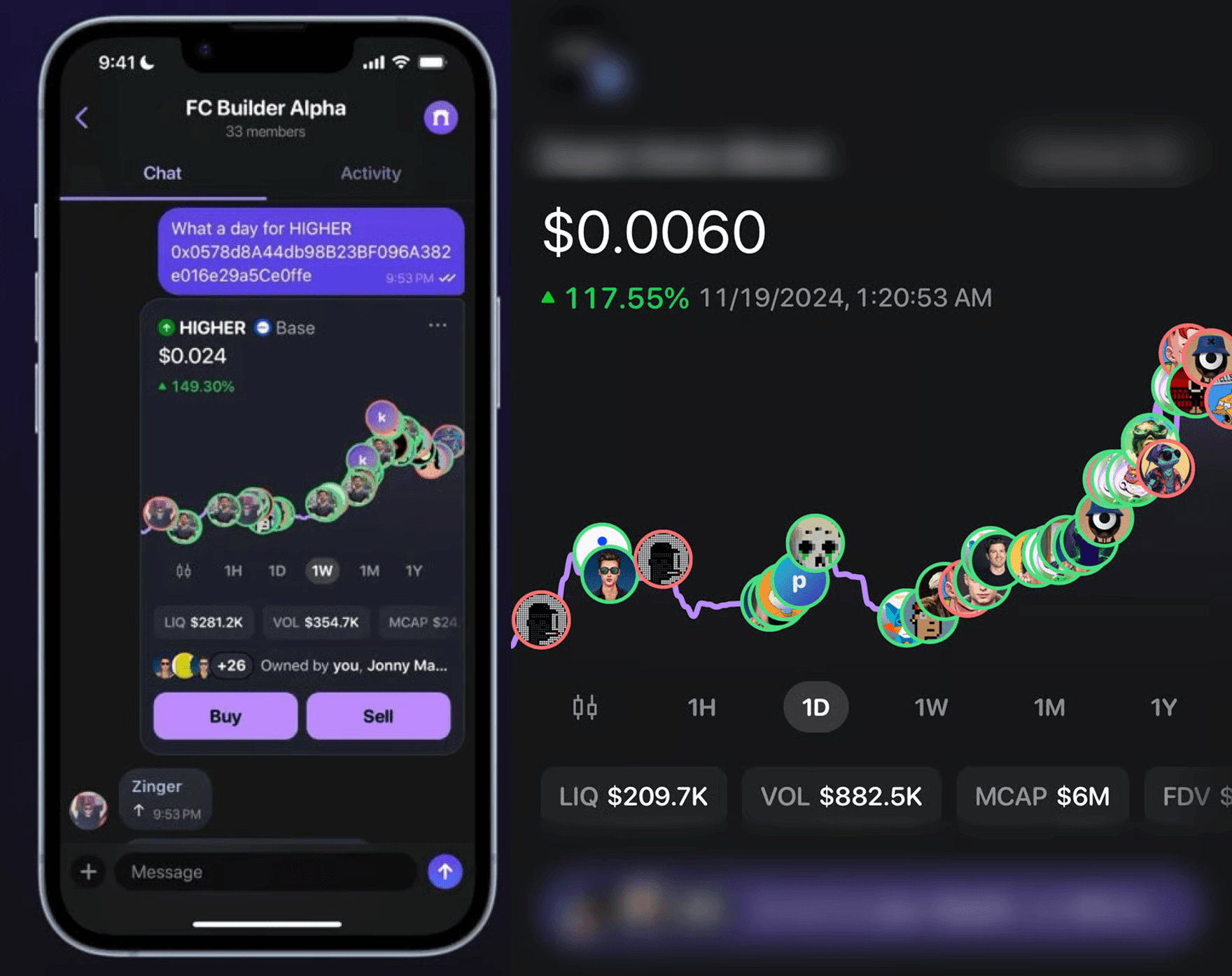
Similarly, several messaging apps have also begun adding wallets on top of their social features. chat apps like frens in the Farcaster ecosystem, as well as DeBox, allow users to paste a CA directly in a group chat, trigger a trading module, and then execute the trade through the embedded wallet. More and more developers are realizing: crypto social shouldn’t avoid mainstream crypto users, its defining feature isn’t distancing itself from wallets but embracing them. The value layer shouldn’t be kept separate, it should be integrated. A crypto social product without an embedded wallet is the one that "took a wrong turn".
Socializing the wallet
Similarly, crypto wallet apps are also trying to incorporate social elements. What began as simple containers for assets and entry points for transactions is now evolving: as user needs and onchain behaviors become more diverse, wallets are starting to integrate social-graph-based signals and social interactions.
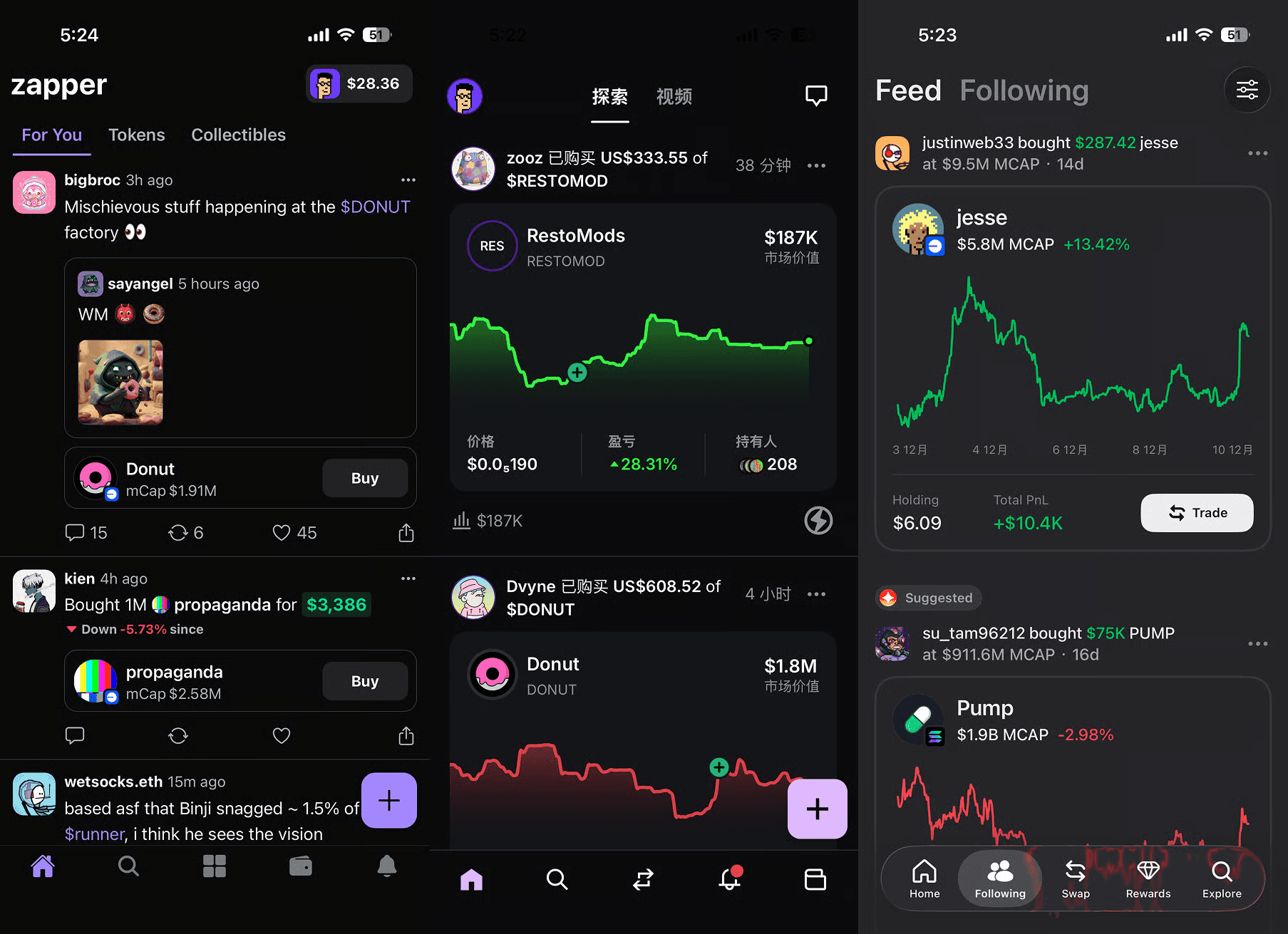
Both Zapper and Base App began as wallets, yet they now integrate Farcaster’s content and social graph, effectively becoming Farcaster protocol clients. This reflects the value of Farcaster as an open, programmable, and composable social protocol. With open interfaces and clear standards, developers can freely build clients or applications on top of Farcaster. Whether it’s a wallet or something entirely different, any app can plug into Farcaster’s social layer without permission.
Zapper layers Farcaster content and social-graph-driven onchain signals on top of its wallet functionality, allowing users to spot trading opportunities directly from the onchain behavior of people they follow, and execute those trades in a single tap.
Base App, on the other hand, incorporates Farcaster for the social feed, Zora for turning creator content into assets, and XMTP for messaging and community chat. The result is that content creation, asset issuance, social discovery, token trading, Mini App interactions, group chats, and even agent interactions can all happen inside Base App, forming a closed loop where content, relationships, and value coexist in one space.
Zerion has also integrated social graphs to power social discovery. Building on its already robust wallet-tracking features, it now incorporates identities from Twitter, Farcaster, and Lens, making it easier for users to surface interesting profiles and signals from top traders.
Centralized exchanges are essentially wallets too, and many of them have been actively exploring social features. Binance launched Binance Feed in 2022 and upgraded it to Binance Square in 2023. Leveraging the world’s largest crypto trading traffic funnel, it has built a trading-centric social platform where users can not only trade but also follow traders, access in-depth content, exchange strategies, and participate in voice chats, livestreams, and other social interactions, all within the same app. The goal is clear: keep users engaged for longer.
Similarly, Robinhood now expanding deeper into crypto and prediction markets, recently announced its own exploration into social, allowing users to share strategies, discover signals, and copy-trade directly on the platform.
However, social layers built by centralized exchanges are closed ecosystems. Just like traditional Web2 platforms, user relationships, content, and identity remain locked inside the platform. Developers can’t freely build new applications on top of these social graphs, and feature expansion depends entirely on the exchange’s own product team. But at the end of the day, users don’t care about architectural openness, they care about whether the product is useful and whether it works well.
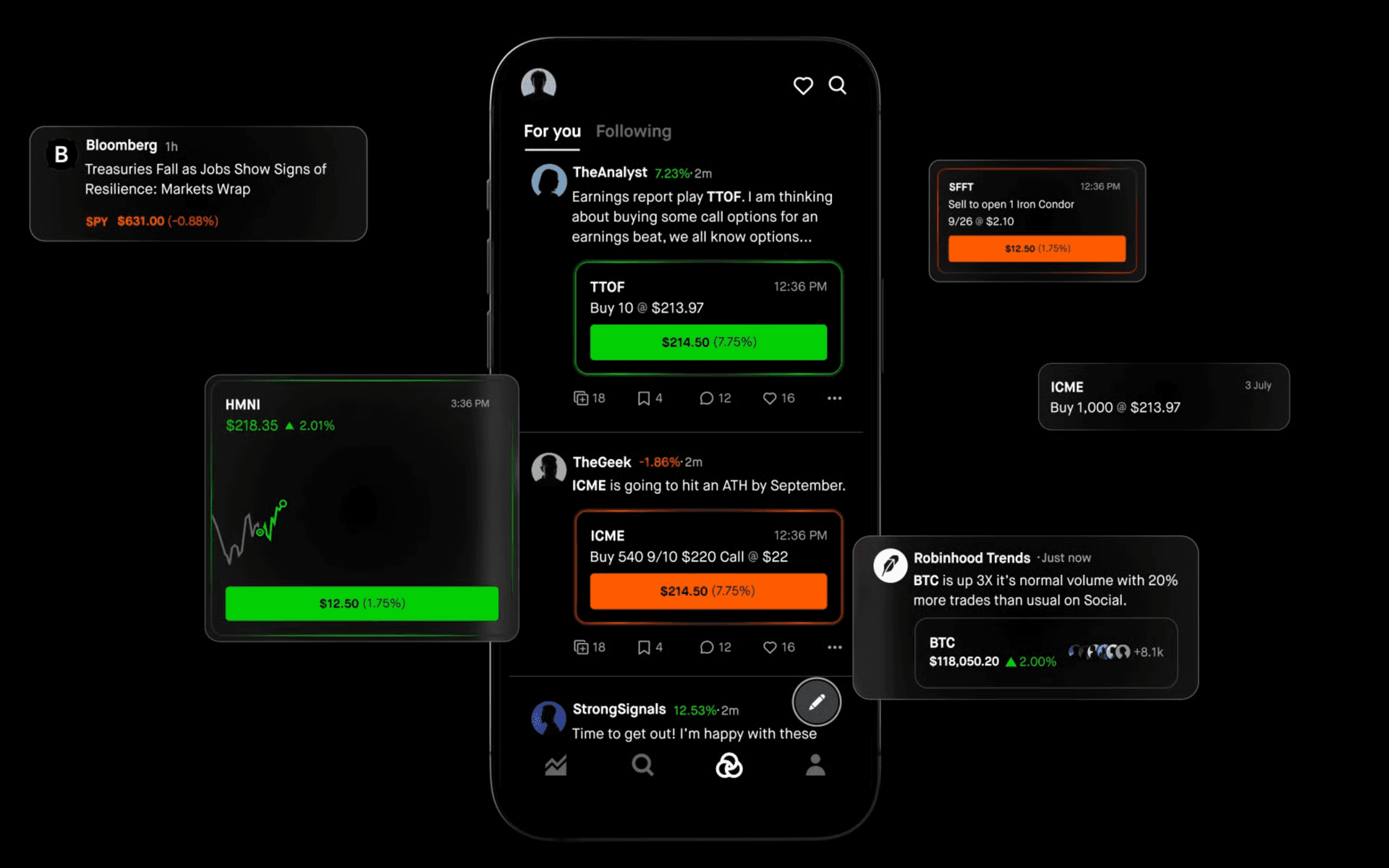
For wallets, social features aren’t decorative, they’re the key step in evolving from a "tool" into a "network". Social context gives meaning to asset activity, provides sources for trading decisions, and creates pathways for content distribution. By adding social layers, a wallet can tap into network effects and move from being just a tool to becoming an ecosystem.
Social + Wallet: Discover, Trade, Create
Social apps are getting walletized, and wallet apps are getting socialized. The two are increasingly intertwined, and this convergence is the natural direction for consumer crypto apps. For crypto social products, avoiding wallet integration is essentially avoiding mainstream crypto users, an inherently passive choice. Not doing it means falling behind and inevitably being replaced by more complete product forms. Social apps need wallets to complete the onchain interaction puzzle. crypto miniapp ecosystems, creator economies, and other core differentiators of crypto social all rely on robust wallet functionality. Adding a value layer on top of the social layer gives the network its growth lever.
For wallets, adding social is more of an enhancement. Users no longer "use it and leave" but stay because of relationships, content, and community. A wallet evolves from a tool into a network, from an entry point into a destination, from an asset manager into an interaction space, naturally expanding into new use cases and benefiting from network effects.
And some applications chose the "social + wallet" path from the very beginning, recognizing early on that the two are inherently complementary and together form a value loop of content, relationships, and assets.
interface.social: Supports trending token discovery, tracking onchain activity of users, copy-trading, and posting trading viewpoints (Takes).
0xppl.com: Supports token discovery, multi-chain wallet activity tracking, copy-trading, and profit monitoring.
Firefly.social: A multi-network social client (X, Farcaster, Lens, Bluesky) supporting cross-platform posting and surfacing trading opportunities by aggregating friends' onchain activity.
fomo.family: Tracks friends' and top traders' onchain trades in real time, with built-in analytics and PnL tracking to quickly surface new assets.
Share.xyz: Allows users to share any trade, follow any wallet, receive real-time trade alerts, and copy trades, while enabling creators to earn a share of copied-trade profits.
gmgn.ai: Helps users quickly discover trending assets, track smart money, monitor holdings and trades, execute transactions with near-instant settlement, and use automated copy-trading, risk checks, and real-time alerts, an all-in-one intelligence and trading tool.
Vector.fun: Supported onchain activity tracking and asset discovery. acquired by Coinbase and currently paused.
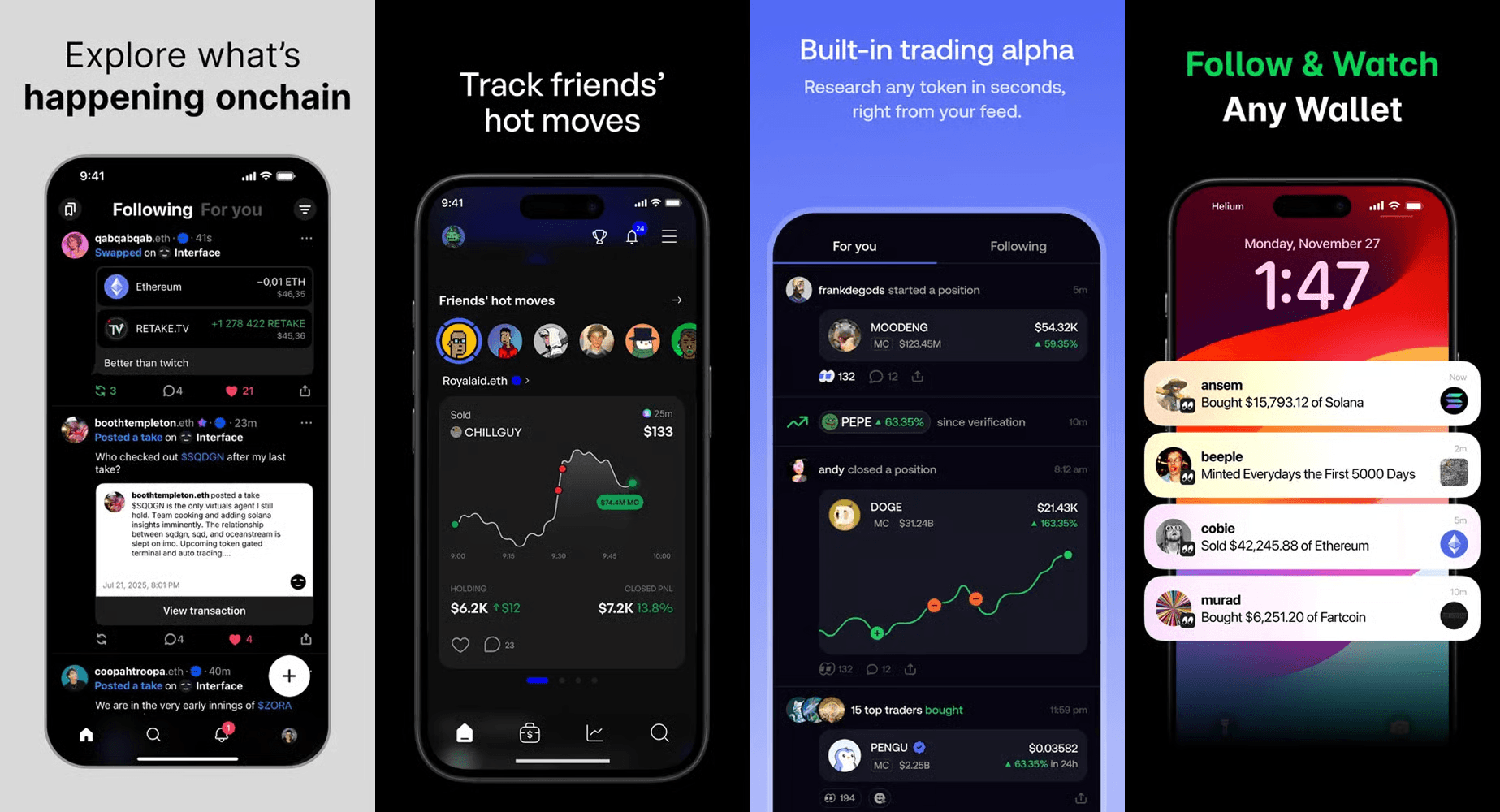
Looking through all these products, you’ll notice that many of them look quite similar in both features and interface. Farcaster’s new slogan, "Discover, Trade, Create", could easily apply to most "social + wallet" apps out there, they’re all about surfacing trading signals, enabling fast copy-trading, and sharing trading strategies.
The difference lies in where each product chooses to focus. Every app makes its own tradeoffs, different feature depths, different priorities, different levels of investment. Some emphasize content creation, encouraging users to articulate "what I’m buying and why". Others invest almost nothing in content and instead double down on execution speed, data insights, or copy-trade efficiency. These choices ultimately shape each product’s strengths and the user experience that emerges.
Who will stand out? Probably the ones that take a single dimension and push it deep enough to become truly excellent.
For example, 0xPPL has become increasingly specialized in onchain identity graph, and because it integrates multiple social graphs, it’s now a powerful tool for quickly identifying wallet personas, especially useful during new token launches. GMGN pushes the entire trading flow, discovery, analysis, execution, to the highest level of efficiency. Zapper and Zerion, as professional wallets, naturally support a very broad range of chains. And in actual cross-chain execution, Farcaster Wallet is remarkably smooth with very little friction.
Interface, fomo, and Share differentiate through "Takes", "Comments", or "Shares", encouraging users to write out their trading rationale and build a layer of content. But because the content layer is centralized, its network effects are limited. Other apps, however, can simply integrate the Farcaster protocol for content creation, allowing user-generated content to spread across a much larger social network.
Apps built on the Farcaster protocol also gain another advantage: they can tap into the hundreds of existing Farcaster Mini Apps, embedding them directly into the social feed. This lets developers expand product functionality effortlessly without reinventing the wheel.
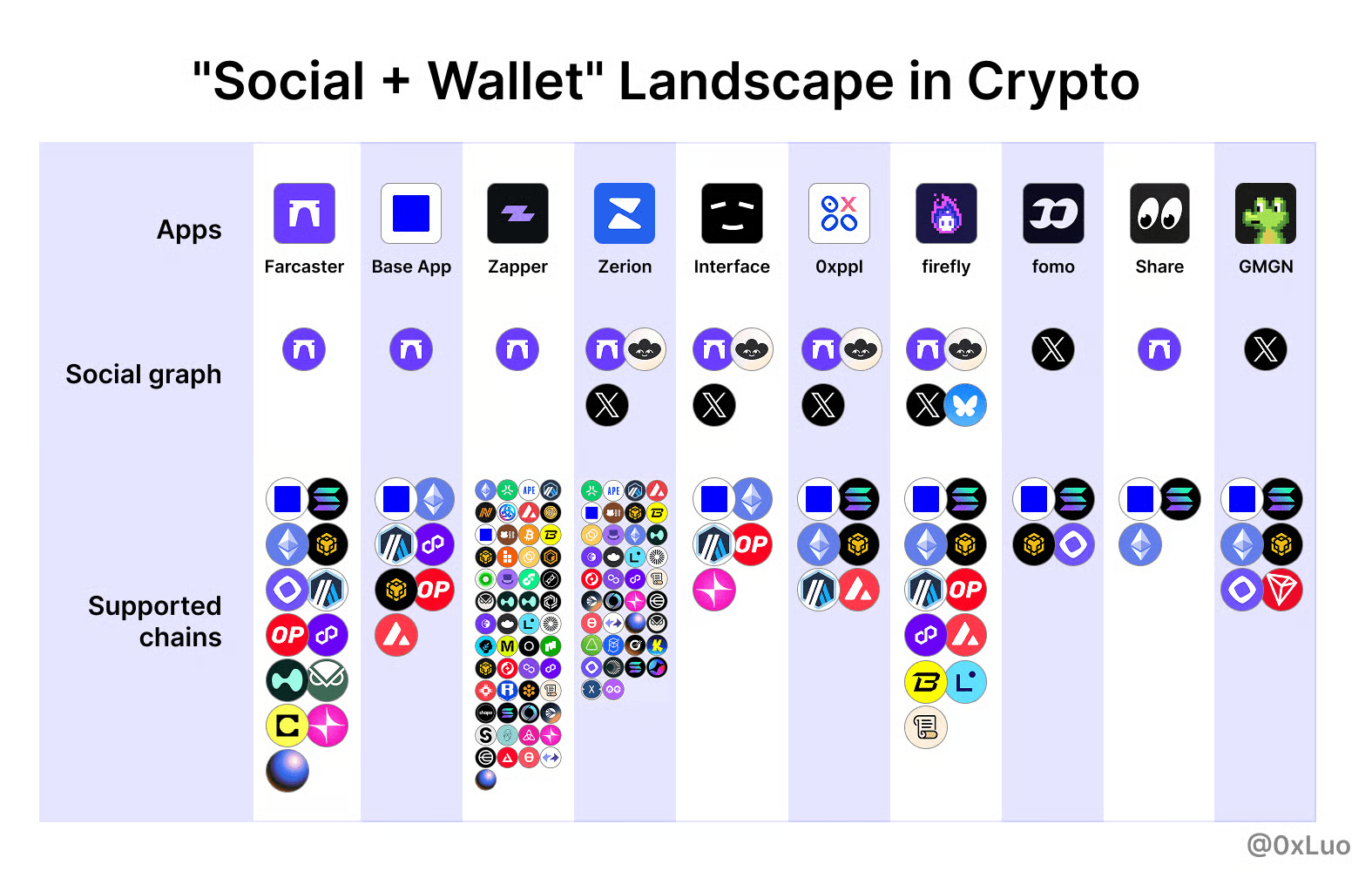
Dan Romero once said that "It’s far easier to add a wallet to a social network than a social network to a wallet". For Farcaster, extending wallet functionality on top of an existing social network is indeed a lighter lift from a product perspective. But other apps can also integrate an existing social network, unless they’re confident enough to build and sustain their own user base.
Looking across the "social + wallet" landscape in crypto, Farcaster and X are the two most common choices when selecting a social graph. But their differences in openness lead to very different integrations: connecting to X often amounts to little more than linking a wallet address to an X account, whereas integrating Farcaster allows apps not only to associate identity but also to import a user’s social relationships and even their existing content, essentially giving them a fully formed social network from day one, without needing to rebuild content or reconstruct the graph from scratch.
As more apps adopt Farcaster as their social infrastructure, the value of the entire network compounds, strengthening the protocol’s network effects. Over the past four years, the Farcaster team has intentionally taken a slow and disciplined approach, building a "small but high-quality" social graph. While this limited short-term growth, the relationships, content, and culture accumulated along the way have become foundational assets for the open crypto social ecosystem. This network will continue to grow, expand, and be adopted in the years ahead.
Conclusion
Farcaster isn’t dead. Crypto social isn’t dead. And Farcaster, as the leading experiment in crypto social, is certainly not dead. Real crypto social was never about building just a social network, it was always about connecting social interaction with value flow. This is why the Farcaster app’s shift this year, from awkward external wallet connections to a fully capable embedded wallet, was not a deviation but a long-overdue foundational upgrade. It’s not abandoning social, it’s empowering social, giving it a new engine for growth.
The recent "mockery" Farcaster has faced only highlights the obvious: the social graph is still small, and daily active users are still limited, leaving room for misunderstanding among those watching from the outside. At the same time, as the broader trend of "social walletization, wallet socialization" accelerates, Farcaster finds itself in a competitive landscape. These are real challenges. And meeting them will require Farcaster to continue relying on its two engines of growth: the product-side "wallet-first" strategy and the ever-expanding ecosystem of Mini Apps. The product layer must keep strengthening value flow, while the protocol layer continues to expand composability.
What happens next? No one can say for sure. But perhaps crypto social truly begins only when wallet functionality is layered onto an existing social network,when value can move freely, the network itself becomes more alive.

Good job
Very interesting,good job
Seeing some misunderstandings and overreactions to Dan's recent casts, especially within the Chinese community. I spent the past few days writing an article to explain what's actually happening and review the trend of "walletizing the social, socializing the wallet".
Mainly I clarify that the convergence of wallets and social offers a more realistic growth path and brings crypto social closer to its PMF Schelling point. The wallet is an addition, not a replacement; it enhances social, not encroaches on it; it expands social, not abandons it; it follows the momentum, not a forced pivot. Crypto social truly begins when wallet functionality is layered onto an existing social network. When value can move freely, the network itself becomes more alive.
spot on bro, layering wallets on social is the real pmf unlock. network comes alive when value flows free
i like the term walletizing
I originally thought about saying “financializing”, but then realized it’s more fitting to use “wallet” directly as the main concept.
appreciate you writing this!
🫡
Maybe you should be in charge of communication 😉
没中文版本吗?
https://paragraph.com/@luochang/walletizing-the-social-socializing-the-wallet
This is great! 感謝~
This is so ridiculous we need to find answers because he cant make normal post and explain everything properly. Ty for post 🔥
walletizing the social sounds wild, need that Dan context cleared up bro