The 101 Of Smart Contracts
Secure Your Products & Sovereignty As A Creator
Imagine you could write down a simple set of rules for your services or products that no one could quietly edit later or take away from you.
Now imagine that rule doesn't live in a platform’s closed backend or in your notebook, but inside a tiny program that runs the same way for everyone, anywhere in the world. The program automatically checks: did a person pay, does the set time window still apply, has this item already been claimed? If the answers match your rule, it grants access or marks your artwork or service as theirs and saves that decision in a public record.
From then on, you don't have to manually update spreadsheets, trust a platform's database, or rebuild everything when you switch platforms (think Patreon and similar). The rules live on their own, and other apps can plug into them. That little program‑with‑rules, stored and executed on a blockchain, is what we call a smart contract.
In the rest of this article, we'll ignore the deep technical details and focus on what these small programs can actually do for you as a creator.
What Can Smart Contracts Really Do For Creators?
Lucky for us as creators, smart contracts are not a new platform we have to trust. They are small programs that can be many things at once and always behave according to the rules programmed into them. Unlike their name suggests, smart contracts are not "smart" like AI, and they are not legal contracts by default.
You can think of them as automated agreements that persist and can only be altered by their owner (specifically, the blockchain wallet that created them). These agreements can look very different and do very different things depending on the rules you set. Here are some concrete ways smart contracts show up that you might already have heard of:
Certifying the authenticity of art or something else on a blockchain is something you may have heard of as NFTs (non-fungible tokens). These tokens are "minted" from a smart contract. The contract created from your own wallet confirms that, in fact, that piece of e.g. art was created by you, and everyone who receives/buys the NFT can verify that it comes from you and your contract on the public record, instead of trusting a marketplace.
Moving and managing money when interacting with cryptocurrency is also based on smart contracts. Every action you take with your crypto wallet, such as buying, trading, swapping, or bridging, is a smart contract that you interact with.
Selling and redeeming physical items (phygitals) is often represented as an NFT as well, which means another token from a contract is issued. Once the buyer claims the NFT, it is marked as redeemed and can't be claimed again. Smart contracts ensure utmost security, among other benefits.
Ticketing and workshops can also be based on blockchain technology and thus interact with smart contracts. Often, these types of contracts are not as rigid and allow the owner to make edits such as the capacity of an event, the date, the ticket transferability, and so on. Through the underlying program, 100% transparency is ensured, making ticket fraud impossible.
Coordinate collaborations and revenue splits is another feature that can be set up through smart contracts. Through these types of contracts, you can pre-define rules like "40% to me, 40% to the co‑creator, 20% to a shared project wallet" for every sale. The contract automatically will enforce those rules for each transaction.
Automating simple "if this, then that" actions is another really common use. Imagine you have issued a blockchain-based membership to your community. Now you have a website, blog, or Telegram channel that only your members can access. With an NFT membership and a smart contract-based verification process, ownership and access can be automated through a simple statement.
All of these examples are just different versions of the same idea: you write down clear rules once, and a smart contract automatically enforces them for you and records the outcomes in a shared, tamper‑resistant history.
Next, let's look at how a contract goes from "idea" to something that actually exists onchain.
How A Contract Goes From Idea To "Live"
When you hear someone say "I deployed a smart contract," they are saying that they made three simple decisions and put them into action:
They decided on the rules of the contract: what purpose does the contract serve, for example, membership passes, art collection, a revenue split, etc. Additionally, they set key inputs, such as price, duration, supply limits, and who gets paid.
They used a tool to turn those rules into a contract. Yes, there are other ways than just line coding to create and deploy a smart contract (we will get to this in the next chapter).
They paid a small fee to publish the contract to a blockchain. Deploying is a more technical term for publishing; in the smart contract context, it means executing a transaction to publish the contract and activate it.
For the first three steps to work, you need a crypto wallet and a small amount of native crypto to cover network fees (also called gas fees). But the important thing to remember is that as long as you use your crypto wallet to deploy the contract, it will not be trapped in a platform's user interface and will remain fully yours. A smart contract lives onchain under your wallet.
Tools Creators Can Use Today
There are quite a few tools out there, but not all give creators the freedom and empowerment they need. Often, platforms abuse the fact that creators can't write code; be careful which tool you choose. Here are some reliable tools that have proven their use over the past few years and we have utilized in ALANA as well:
Use Case | Ideal Tool | How It Works |
|---|---|---|
Memberships and access passes (such as tickets, but not limited to) | You set basic settings, such as price and duration, in a web dashboard. The tool deploys a contract for you and gives you links or widgets you can plug into your existing platforms. | |
Art Collections (but not limited to) | You walk through a step‑by‑step interface to name your contract, set symbols, upload artwork, and configure drops, while the platform handles the technical deployment in the background. | |
Phygital and redeemable items (focused on that specific use case) | You describe the product, price, and redemption conditions in a seller interface. The tool mints redeemable tokens and offers checkout or storefront options that integrate with marketplaces or your own site. | |
Revenue splits and shared earnings (focused on that specific use case) | You enter wallet addresses and percentages in a simple UI. The tool deploys a split contract once, and you can reuse its address for multiple projects, knowing funds will always follow the same rules. |
Next Steps
Sometimes it can be hard to know what the "right" choice is for you to get started. Our recommendation is that if you are not quite sure and need a lot of flexibility, you may want to start with Unlock Protocol, as it provides the most flexible creation suite. If you need something very specific, such as a revenue split, start with that.
But also great news: On February 25, we're hosting a live webinar together with our new partner Announce Digital Fashion, where we'll walk you through deploying an Unlock smart contract from scratch. If you've never touched this topic before, this is a safe place to do it together and leave with your own contract that lives onchain. RSVP here.
And remember:
"Clicking 'deploy' in a no‑code tool doesn't make the contract theirs (protocol you used). The rules still live under your wallet, onchain, where you can reuse them long after any interface changes."
Have a great week, ALANA adventurers!
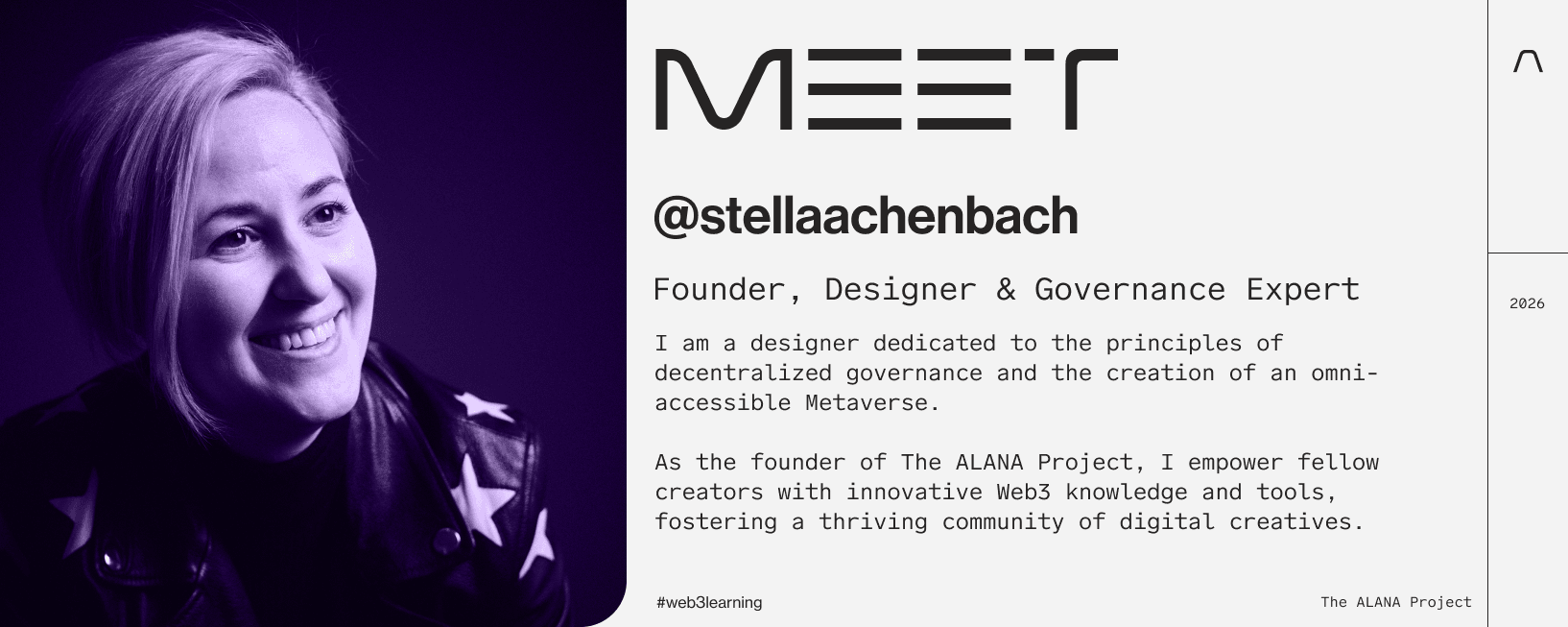
Stella Achenbach
Find The ALANA Project on: